







In a condo, floor space is the scarcest thing you own, while most walls sit empty above waist height. Burnaby wall storage ideas work by flipping that around: move storage onto the walls, keep it shallow and run it to the ceiling, so the floor stays clear. A single well-planned wall can replace a bookcase, a sideboard and a storage cabinet, and leave the room feeling bigger rather than smaller.
This guide covers how deep wall storage should be, ideas for living rooms, entries without a closet and bedrooms, and how to fix storage safely to the concrete and steel-stud walls common in Burnaby towers.
|
Key takeaways
|
Why Wall Storage Works So Well in Small Condos
Wall storage works in small condos because it uses space that freestanding furniture wastes. A typical bookcase stops well short of the ceiling, a sideboard leaves empty wall above it and both sit on the floor, which is what makes a room feel crowded.
Built-in and wall-mounted storage units change three things at once. They use the full height of the wall, they can be made shallower than standard furniture because they are fixed in place, and floating designs leave the floor visible underneath. In a Metrotown or Brentwood suite where the living room, dining area and entry share one open space, that combination makes a noticeable difference.
How Deep Should Wall Storage Be in a Small Room?
Wall storage in a small room should be only as deep as the largest thing it has to hold. For books and decor, 10 to 12 inches (25 to 30 cm) is usually enough; dishes and small appliances need more; closed cabinets for bulky items need the most. Planning by contents, not by standard furniture sizes, is what keeps walkways open.
|
What you store |
Typical depth that works |
Notes |
|---|---|---|
|
Books, photos, decor |
About 10–12 in (25–30 cm) |
Shallow enough for hallways and living rooms |
|
Dishes, glassware, bar items |
About 12–16 in |
Similar to standard upper kitchen cabinets |
|
Shoes (tilt-out cabinet) |
Shallow; varies by design |
Tilt-out fronts store shoes at an angle to save depth |
|
Files, printer, electronics |
About 16–24 in |
Check device dimensions and leave room for cables and airflow |
|
Bulky items, bins, vacuum |
About 20–24 in |
Usually best behind doors, at full height |
Depths are general planning ranges. Measure your largest items before you decide.
A useful rule: if a shelf is deeper than what sits on it, the space behind becomes a place where things get lost. Shallower and taller almost always beats deeper and shorter in a condo.
Plan the Wall in Zones
The most usable wall storage units are planned in three height zones rather than as identical shelves from floor to ceiling:
- Low zone (floor to about knee height): closed cabinets or drawers for heavier items you do not need every day. In a floating unit, this zone may be left open to the floor.
- Middle zone (about knee to shoulder height): daily items and anything heavy you lift often. This is the most valuable storage on the wall.
- High zone (above shoulder height to the ceiling): seasonal items, spare bedding, luggage and archive boxes, ideally behind doors so the wall reads as clean and calm.
Floor-to-Ceiling Storage for a Condo Living Room
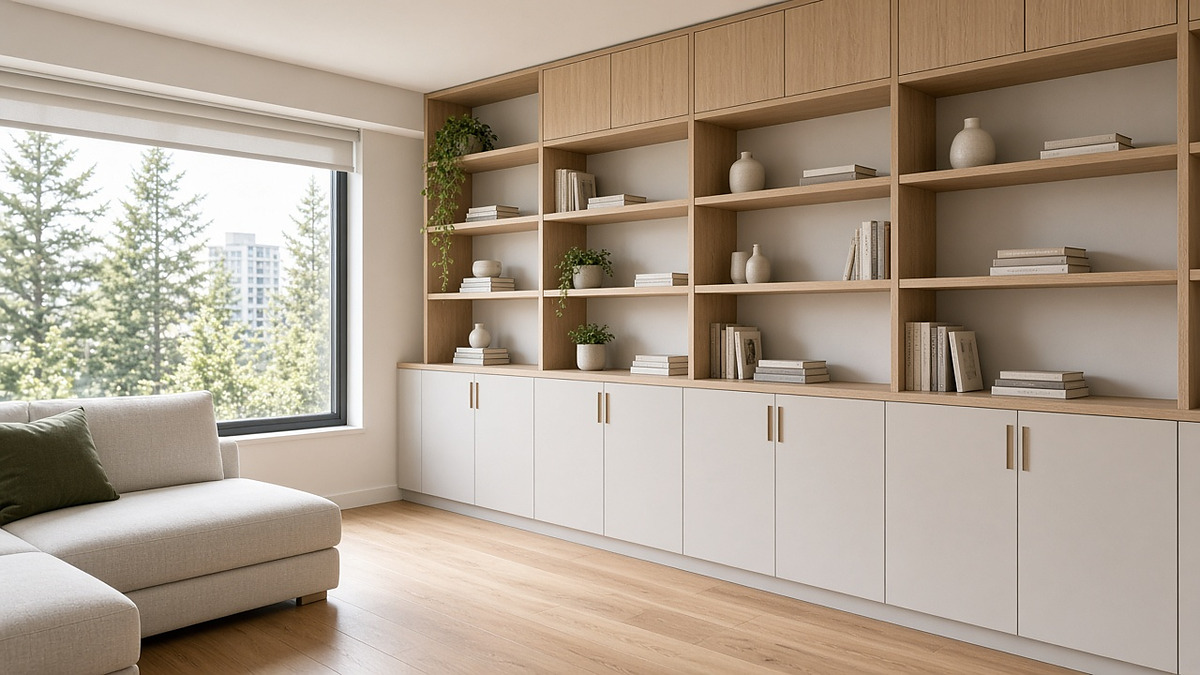
Floor-to-ceiling storage for a condo living room works best on the longest uninterrupted wall. A common layout combines closed cabinets at the bottom for clutter, open shelves at eye level for books and display and closed upper cabinets near the ceiling for things you rarely need.
Three choices make a big wall feel lighter rather than heavier:
- Float the base. Lifting the lowest cabinets off the floor keeps the floor visible and makes cleaning easier.
- Mix open and closed. All open shelving looks busy; all closed doors can feel like a wall of cupboards. A mix weighted toward closed storage, with open shelves at eye level, usually reads well.
- Match the wall colour. Custom wall cabinets finished close to the wall colour recede visually; a contrasting finish turns the wall into a feature.
If the same wall holds the TV, plan the media section, cable routes and equipment ventilation at the same time as the storage.
Wall Cabinets for an Entryway Without a Closet
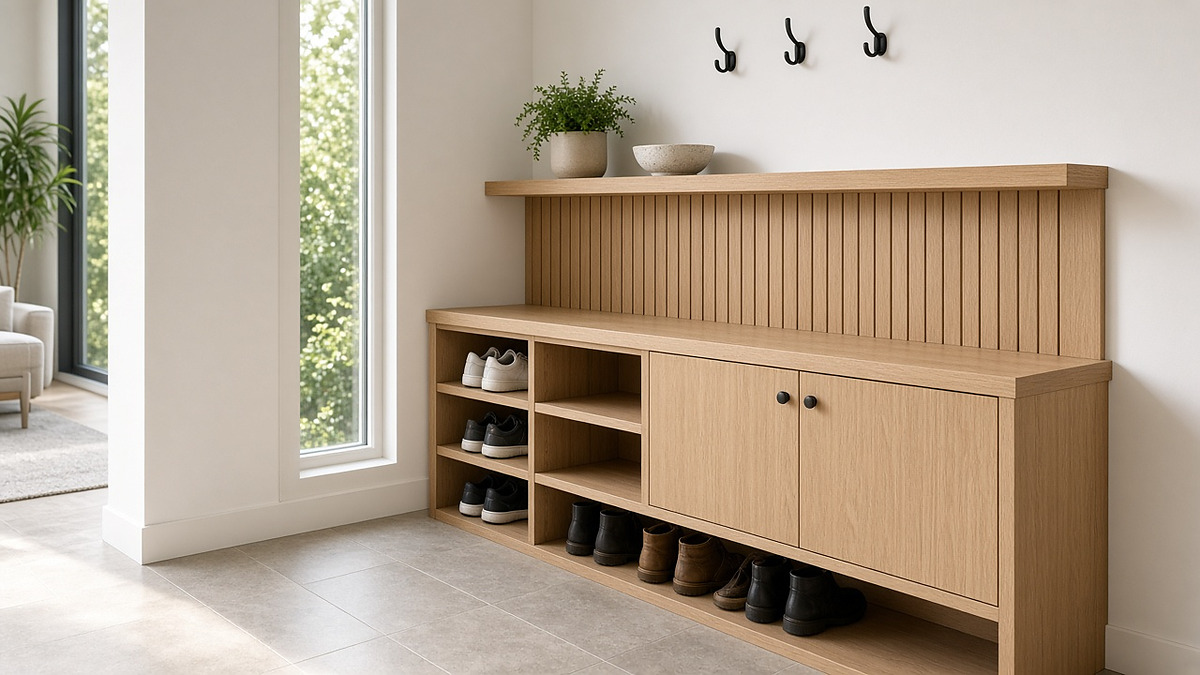
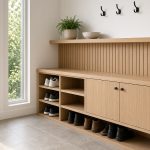
Many condo entries have no closet at all, just a short stretch of wall beside the door. Wall cabinets for an entryway without a closet can still handle shoes, coats, keys and bags if they are planned in layers:
- A shallow shoe cabinet with tilt-out fronts at floor level, so shoes are hidden but the cabinet stays thin.
- A drip-friendly surface or tray for wet umbrellas and boots, since rainy months are long in the Lower Mainland.
- Hooks or a short rail at shoulder height for the coats and bags you use daily.
- A slim shelf or drawer for keys, mail and sunglasses at hand height.
- An upper cabinet for off-season items such as hats, gloves and spare umbrellas.
Keep the projection modest so the door still opens fully and two people can pass in the entry.
Wall Storage Ideas for Small Apartments: Bedrooms and Hallways
The same principles work elsewhere in small apartments:
- Over-bed bridge cabinets span the wall above the headboard and connect to tall wardrobes on either side, turning the bed wall into storage.
- Hallway linen walls use a shallow run of cabinets along a corridor for towels, cleaning supplies and toiletries.
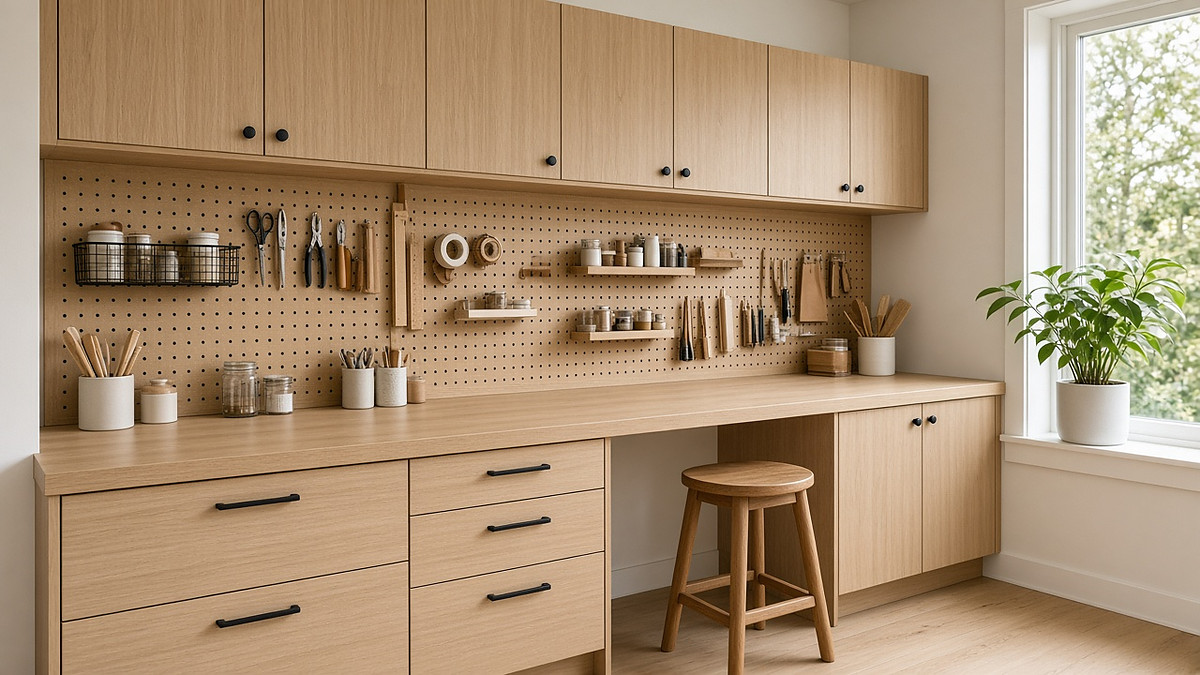
- Wall above a desk holds files and supplies in upper cabinets so the work surface stays clear.
- Laundry nooks gain a rail for hangers and a shelf for detergent above stacked machines.
Fixing Wall-Mounted Storage Safely in a Burnaby Tower
Wall-mounted storage is only as safe as its fixings. Many Burnaby towers have concrete exterior and party walls with a few framed partitions, and each needs a different approach:
- Concrete walls: strong, but they need concrete-rated fasteners and a hammer drill, which brings noise and strata questions.
- Steel-stud partitions: fasten to the studs with suitable screws or add blocking. Drywall anchors alone are not suitable for loaded cabinets.
- Wood-frame walls: common in townhomes and low-rise buildings; fasten to studs.
Tall freestanding pieces matter too. Health Canada warns that furniture and televisions can tip over when children climb them and recommends anchoring furniture to the wall with angle braces or safety straps. Built-in and wall-mounted storage solves that problem by design, as long as it is properly fixed.
Strata approval: under BC’s Standard Bylaw 5, an owner needs the strata’s written approval before altering a strata lot in a way that involves the building’s structure or common property within the lot. Drilling into a concrete wall can fall into that category, and your building may have its own bylaws and quiet hours for drilling. If you rent, get your landlord’s written permission first.
Wall Storage in Burnaby: When Custom Makes Sense
Off-the-shelf wall shelves and modular systems suit a single flat wall with standard needs. Custom wall cabinets are worth considering when the wall has a bulkhead, window or column to work around, when depth needs to be shallower than standard furniture, when the unit has to combine storage with a TV, desk or bed, or when fixing into concrete needs to be planned with the strata.
Companies offering custom storage solutions in Metro Vancouver can measure the wall, size each section to its contents and plan the fixing method before anything is built. My Inspired Space, for example, designs wall storage for Burnaby condos and older homes, sizing shelf depth to the room and checking strata requirements before drilling into concrete.
Whoever you work with, list what the wall needs to hold before the first meeting. The contents decide the depth, and the depth decides how much floor space you get back.
Frequently Asked Questions
How deep should wall shelving be in a small room?
For books and decor, about 10 to 12 inches (25 to 30 cm) is usually enough. Plan deeper sections only for the items that need them, such as electronics or bulky bins.
Can you install wall storage in a concrete condo?
Usually, yes, using concrete-rated fasteners or by fixing to framed partitions where possible. In a BC strata, check whether drilling into concrete needs written approval first.
What can I use instead of a closet in a condo entry?
A shallow tilt-out shoe cabinet, hooks or a short rail for coats, a small shelf for keys and an upper cabinet for off-season items can replace a closet on a single stretch of wall.
Is floor-to-ceiling storage a good idea in a small living room?
Yes, if it is kept shallow and mixes open and closed sections. It holds more than freestanding furniture and leaves the floor clear, especially if the base is floating.
Do I need to anchor tall shelving to the wall?
Yes. Health Canada recommends anchoring tall furniture to the wall to prevent tip-overs, especially in homes with young children.