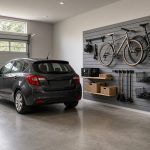





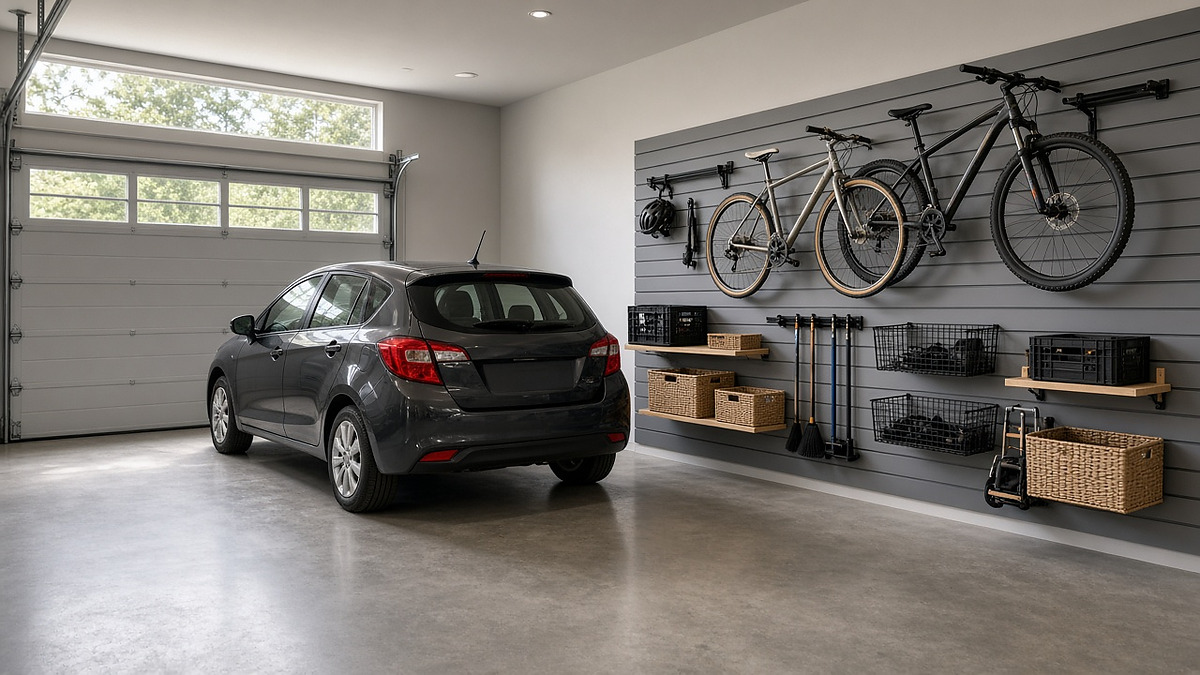
A tandem townhouse garage parks two cars nose to tail in a space that is long and narrow, so every bike, stroller and hockey bag competes with the car doors for the same few feet of width. Garage slatwall in Burnaby townhouses solves that by moving gear onto the long walls, where it can be rearranged by season without tools. The trick in a tandem garage is not how much the wall holds, but how far things stick out from it, and where.
This guide covers how to plan slatwall around car doors, which panel materials suit a damp unheated garage, how to store bikes and sports gear, and the strata and safety points that apply to townhouse garages.
|
Key takeaways
|
Why Tandem Garages Get Cluttered So Fast
Tandem garages get cluttered quickly because there is almost no spare floor. With one car in front of the other, the only free space is a strip along each long wall, the area in front of the first car’s bumper and a little behind the second. Anything left on the floor in those strips blocks a car door or the walk to the house.
Burnaby households also tend to own a lot of gear. The Central Valley Greenway, the trails on Burnaby Mountain and the North Shore ski hills are all close, so bikes, skis, paddles and sports bags pile up by the door. Garage wall organization turns those long walls into the storage system and keeps the floor clear for parking.
How to Organize a Narrow Garage: Plan by Projection
The best way to organize a narrow garage is to map how far items can stick out from each section of wall, then assign gear to match. Car doors need room to swing, so the wall beside each door can only hold shallow items. The wall in front of the first car and behind the second can take deeper items.
- Park both cars and open every door. Mark on the wall, with painter’s tape, where each door’s edge reaches when fully open.
- Measure the clear space. At each door zone, measure from the wall to the open door edge. That is your maximum projection there.
- Mark the deep zones. The sections in front of the first car, behind the second and between the bumpers usually allow much deeper storage.
- Assign gear by depth. Put brooms, rakes, extension cords and hand tools in door zones. Put bikes, bins, strollers and golf bags in deep zones.
|
Wall zone |
Typical projection available |
What to store there |
|---|---|---|
|
Beside car doors |
Shallow; measure with doors open |
Hand tools, brooms, cords, helmets, flat-hanging items |
|
In front of the first car |
Deeper |
Bins on shelves, bikes hung vertically, golf bags |
|
Behind the second car |
Deeper |
Seasonal gear, ladders hung flat, stroller |
|
Above car-door height |
Deep, if clear of the garage door track |
Long items on high hooks, seasonal bins on slatwall shelves |
Check the garage door’s tracks, opener rail and any ceiling-mounted lights before putting deep shelving up high.
Is Slatwall Worth It for a Small Garage?
Slatwall is worth it for a small garage when your gear changes with the seasons, because hooks and baskets move in seconds without tools. It is less useful if you want everything hidden behind doors or need to hang a single very heavy load in one spot. In those cases, pair slatwall with closed cabinets or overhead racks.
|
Option |
Strengths |
Limitations in a tandem garage |
|---|---|---|
|
Slatwall panels |
Flexible; accessories move without tools; covers whole walls |
Higher cost per square foot than pegboard |
|
Rail or track systems |
Strong, simple, lower cost |
Accessories only along the rail line |
|
Pegboard |
Inexpensive |
Lower capacity; hardboard versions do not suit damp garages |
|
Closed cabinets |
Hide clutter; lockable |
Deeper; can block car doors |
Choosing Slatwall Panels for a Damp Burnaby Garage
Slatwall panels for an unheated Lower Mainland garage should be moisture-resistant, which in practice means PVC or aluminum rather than MDF. Garages here stay cold and humid for much of the winter, and fibreboard panels can swell or sag over time.
- PVC: the common choice for residential garages. One Canadian-made system, Trusscore SlatWall, is rated at up to 75 lb per square foot and marketed as waterproof and mould-resistant.
- Aluminum: stronger and more expensive. Some aluminum systems are rated at up to 100 lb per square foot, according to published comparisons.
- MDF: cheaper and common in retail displays, but less suited to a damp garage.
Two important caveats. First, panel ratings assume the panels are screwed through the drywall into the studs, not held by drywall alone. Second, slatwall hooks and baskets have their own ratings, often well below the panel’s. A heavy e-bike needs a hook rated for its weight, not just a strong panel.
Slatwall for a Tandem Townhouse Garage: Bikes and Sports Gear
Bikes take more wall space than anything else in most Burnaby garages, so plan them first.
- Vertical hooks hang a bike by one wheel and use the least wall width, but stick out further. Use them in deep zones.
- Horizontal or flat-mount hooks hold a bike parallel to the wall. They use more width but stick out far less, which suits narrower zones.
- E-bikes are much heavier. Use hooks rated for the weight, or a floor stand in a deep zone.
Slatwall hooks and baskets suit the rest of the gear: wire baskets for balls and gloves, J-hooks for helmets and skates, double hooks for skis and poles, and slatwall shelves for bins of seasonal gear. Swap summer and winter equipment between hand height and the high zone as the seasons change.
Safety Points for Townhouse Garages
Keep the garage-to-house wall sealed. Canada’s National Building Code requires an air barrier between an attached garage and the rest of the home to keep exhaust fumes and gas out, as the National Research Council’s code guidance explains, and BC’s building code is based on the national model. Screwing slatwall into studs is normal, but avoid cutting openings in that wall. If you add an outlet or cut drywall, have the penetration sealed properly.
Respect walls shared with neighbours. In a strata townhouse, a wall between two garages may be a fire separation, and under section 68 of the Strata Property Act the boundary often runs through the middle of shared or exterior walls. Under Standard Bylaw 5, alterations involving structure or common property within a strata lot need written approval. Check your bylaws before fastening into a party wall.
Charge e-bikes carefully. BC fire officials and e-bike retailers advise never leaving a battery charging unattended overnight, as CTV News has reported, and West Vancouver’s e-bike safety tips advise keeping e-bikes and batteries away from exit doors and anything hot or flammable. Do not set up a charging spot beside the door into the house.
Garage Slatwall in Burnaby: DIY Kit or Professional Install?
A slatwall kit is a reasonable weekend project if your garage has standard wood-stud walls, a clear long wall and nothing unusual to work around. A professional install is worth considering when the walls are concrete block or unfinished, when you want slatwall combined with cabinets or overhead storage, or when the projection planning around car doors needs to be precise.
My Inspired Space, a custom closet company in Metro Vancouver that also designs garage storage, installs PVC and aluminum panel systems fastened into the studs and plans them around what each household owns. Its page on garage slatwall systems in Burnaby describes a typical tandem layout, with one long wall holding bikes, a stroller, sports bags and garden tools while leaving room for both cars.
Whoever does the work, bring your projection map. Knowing where the car doors swing is what makes a tandem garage work.
Frequently Asked Questions
How much weight can garage slatwall hold?
It depends on the panel and the fastening. One PVC system is rated at up to 75 lb per square foot and some aluminum systems at up to 100 lb, but only when fastened into studs. Hooks and accessories have their own, often lower, ratings.
Is slatwall good for a damp, unheated garage?
PVC and aluminum panels resist moisture and suit unheated garages. MDF panels are less suited to damp conditions.
How do I store bikes in a narrow tandem garage?
Use vertical hooks in deeper zones in front of or behind the cars, and flat-mount hooks where space is tight. Use hooks rated for heavier e-bikes.
Can I install slatwall on a shared townhouse garage wall?
Check your strata bylaws first. Shared walls may be fire separations and may include common property, and alterations involving structure or common property can need written approval.
Is slatwall better than pegboard?
For most garages, yes. Slatwall holds more, handles moisture better in PVC or aluminum, and accessories move more easily. Pegboard is cheaper.