




In many Burnaby homes, shoes come off at the door, and then they stay there in a pile. Runners, rain boots, work shoes and every guest’s footwear end up in an entry that was never designed to hold them. Good shoe storage in Burnaby homes starts with two numbers: how many pairs actually live by the door, and how deep the entry can afford to give up. Get those right and even a narrow condo hallway can hold a family’s shoes out of sight.
This guide covers how to count what needs storing, slim options for small condo entries, how to handle wet footwear, and when to move shoes into a closet instead.
|
Key takeaways
|
Why Shoes-Off Homes Need Better Entry Storage
Taking shoes off at the door is a habit in many Lower Mainland households, and there are practical reasons for it. University of Georgia Extension estimates that 30 to 40% of contaminants in homes are tracked in from outdoors and recommends removing shoes at the entry and using a good doormat to cut down on dust, lead and other contaminants.
The habit has a cost, though: every pair the household owns, plus visitors’ shoes, ends up within a metre of the front door. In condos around Metrotown, Brentwood and Lougheed, that entry is often just a slice of hallway. Without a plan, the pile wins.
How to Store Shoes in a Shoes-Off Household: Count First
To store shoes in a shoes-off household, count the pairs that genuinely need to live by the door, separate seasonal and occasional pairs, and add a few spots for guests. Most households underestimate the first number. A simple count:
- Daily pairs: for each person, the shoes they wear most weeks. Often two or three pairs each.
- Seasonal pairs: rain boots in winter, sandals in summer. These can rotate between the entry and a closet or the garage.
- Occasional pairs: formal shoes, hiking boots, sports cleats. These belong in a bedroom closet or storage, not the entry.
- Guest overflow: a few open spots or a basket for visitors, so the floor does not fill up when people come over.
Also note the size mix. Kids’ shoes, heels and tall boots need very different shelf heights, so adjustable shelves usually beat fixed ones.
|
Example household |
Pairs that live by the door |
|---|---|
|
Couple in a one-bedroom condo |
About 5–7 pairs, plus 2–3 guest spots |
|
Family of four in a townhouse |
About 10–12 pairs, plus seasonal rain boots and 3–4 guest spots |
Illustrative estimates using two to three daily pairs per person. Do your own count before choosing storage.
Shoe Storage for a Small Condo Entryway
The best shoe storage for a small condo entryway is shallow, closed and wall-hugging. Condo hallways are often only about a metre wide, so a deep cabinet blocks the path. Options in order of how little depth they need:
- Tilt-out shoe cabinets: shoes stand at an angle inside fold-down compartments, so a cabinet roughly 20 to 25 cm deep can hold several pairs per compartment.
- Wall-mounted narrow shelves: open, shallow and cheap, but shoes stay visible.
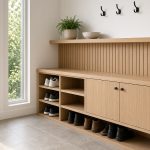
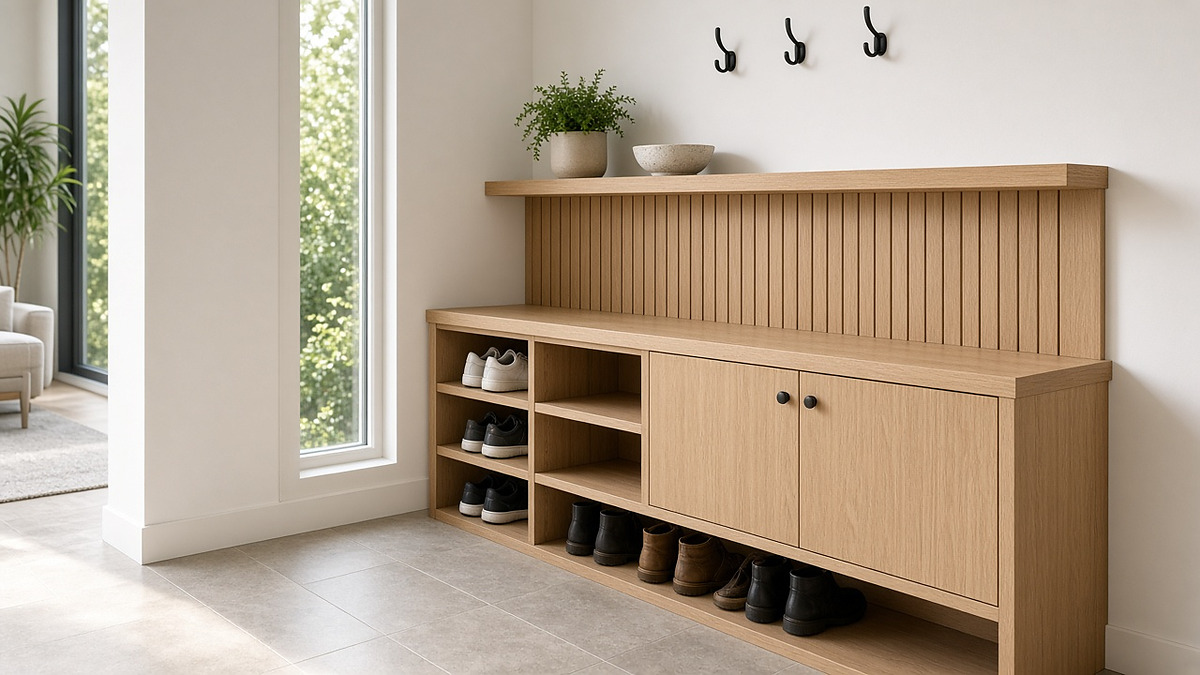
- Bench with storage: a seat with cubbies or drawers below gives shoes a home and people a place to sit. It needs more depth, so it suits wider entries.
- Under-stair pull-outs: in a townhouse with stairs near the door, the space under the first steps often holds pull-out shoe drawers.
Whatever you choose, keep the projection small enough that the front door opens fully and two people can pass.
Slim Shoe Cabinet for a Narrow Hallway: What to Check
A slim shoe cabinet for a narrow hallway is the most common condo solution, and a few details decide whether it works day to day:
- Compartment height: check that your tallest everyday shoes fit, especially high-tops and ankle boots.
- Ventilation: gaps, perforations or a vented back help shoes air out between wears.
- A useful top: a top surface at hand height holds keys, mail and sunglasses.
- Anchoring: tilt-out cabinets can become top-heavy when the compartments are open. Health Canada advises anchoring furniture to the wall with angle braces or safety straps to prevent tip-overs. Fix the cabinet to studs, blocking or concrete with the right fasteners.
Wet Boots and Rainy Months
Wet footwear is a real issue in the Lower Mainland for much of the fall, winter and spring. Closing soaked boots inside a cabinet traps moisture, which leads to odour and can damage the cabinet. Plan a wet zone instead:
- A removable boot tray at floor level, or a ventilated bottom shelf, for rain boots and soaked runners.
- A hook or rail for umbrellas above the tray, so drips land in one place.
- A rule of thumb: let wet shoes dry in the open before they go into a closed compartment.
In a house where the side or garage door is the real family entrance, a mudroom-style setup with a bench, hooks and boot trays keeps muddy footwear off the hall floor entirely.
When Shoes Belong in the Closet: Shoe Rack Closet Inserts
Not every pair needs to live at the door. Occasional and seasonal shoes are better in a bedroom closet, where a shoe rack closet insert keeps them visible and protected:
- Adjustable flat shelves with fences that stop shoes sliding off.
- Angled shelves that display pairs at a slope, so each is easy to see.
- Pull-out shoe racks in a reach-in closet, which bring the back row forward.
- A dedicated shoe wall in a walk-in closet for larger collections.
Moving occasional pairs out of the entry is often the single biggest improvement, because it shrinks the number of shoes the entry has to hold.
Shoe Storage in Burnaby: When Custom Makes Sense
A freestanding shoe cabinet works in a standard entry with a flat wall. Custom shoe storage is worth considering when the hallway is narrower than off-the-shelf cabinets allow, when the entry has a column, bulkhead or awkward corner, when you want a shoe cabinet for the entryway built together with hooks, a bench and upper storage, or when a townhouse has under-stair space to use.
Designers who offer custom storage solutions in Metro Vancouver can count pairs, measure the hallway and size compartments to your shoes. My Inspired Space, for example, starts each shoe storage design with a pair count and uses shallow tilt-out cabinets for narrow Burnaby condo hallways, with ventilated shelving or removable trays for wet boots.
Before any consultation, do your own count. Knowing how many pairs need to live by the door is the number that decides everything else.
Frequently Asked Questions
What is the best shoe storage for a narrow condo hallway?
A shallow tilt-out shoe cabinet, roughly 20 to 25 cm deep, is usually the best choice. It stores shoes at an angle and keeps the hallway walkable.
How many pairs of shoes should my entry hold?
Count daily pairs for each person, often two or three, then add a few spots for guests. Store seasonal and occasional pairs elsewhere.
How do I store wet boots without damaging a cabinet?
Use a removable tray or ventilated shelf at floor level and let wet shoes dry in the open before closing them into a compartment.
Do shoe cabinets need to be anchored?
Yes, especially tall or tilt-out cabinets. Health Canada recommends anchoring furniture to the wall to prevent tip-overs.
Where should I keep shoes I rarely wear?
In a bedroom closet with fenced shelves, angled shelves or a pull-out shoe rack, rather than in the entry.